

Cách Hỗ Trợ Người Thân Bị Trầm Cảm Mà Không Làm Họ Cảm Thấy Bị Phán Xét, Từng Bước
Supporting someone you love through depression is one of those situations where good intentions can backfire fast. You say “I’m just trying to help,” and they hear “you’re failing” or “you’re a burden.” The goal of this guide is simple: follow a clear, step-by-step process so you can be present, useful, and non-judgmental—even when you’re scared, frustrated, or unsure what to say.
This article targets the exact need behind the phrase “cách hỗ trợ người thân bị trầm cảm mà không làm họ cảm thấy bị phán xét”—how to support a loved one with depression without making them feel judged.

Why people with depression feel judged (even when you don’t mean it) 🧠
Depression isn’t just “feeling sad.” It affects energy, concentration, sleep, appetite, motivation, and self-worth—so everyday tasks can feel like climbing a mountain.
When you try to “fix it,” they may interpret it as:
- “You shouldn’t feel this way.”
- “You’re overreacting.”
- “You’re not trying hard enough.”
The takeaway is clear: your loved one doesn’t need a judge or a coach first. They need safety—then support.
If you’re not sure whether what you’re seeing is stress or depression, it helps to ground yourself in basic signs first. You can use this internal guide: How to recognize depression signs in adults and do an initial self-check.
The non-judgment support framework (overview) ✅
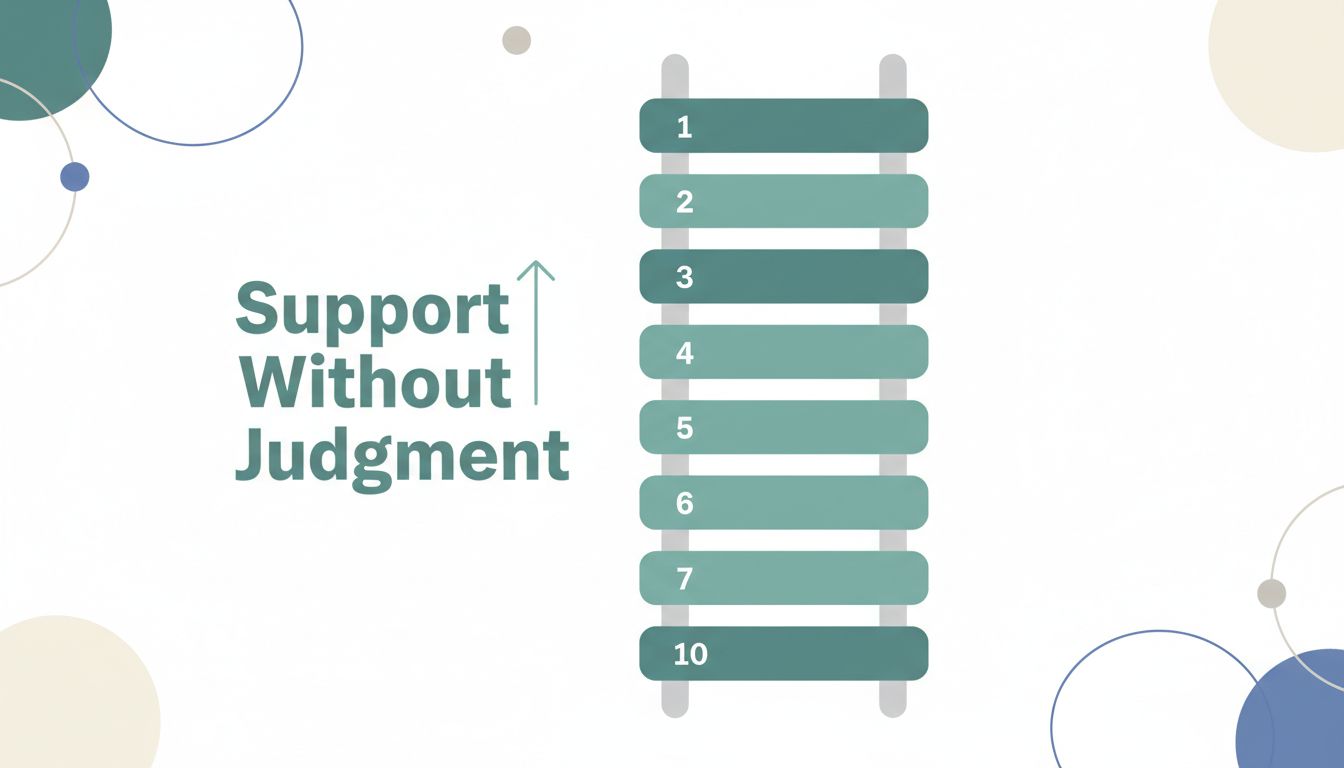
Here’s the step-by-step roadmap you’ll follow:
| Step | Your goal | What “non-judgment” looks like |
|---|---|---|
| 1 | Regulate yourself first | Calm voice, steady tone, no lecturing |
| 2 | Ask permission to talk | “Is now a good time?” |
| 3 | Validate before problem-solving | “That sounds heavy” |
| 4 | Use questions that reduce shame | Curious, gentle, specific |
| 5 | Offer small, concrete help | Two options max |
| 6 | Avoid common “judge-y” phrases | No minimizing, no comparisons |
| 7 | Make a simple support plan | Roles, check-ins, next step |
| 8 | Know when it’s urgent | Safety beats privacy |
| 9 | Encourage professional support | Warm handoff, not pressure |
| 10 | Protect your own capacity | Boundaries without abandonment |
Step 1: Regulate yourself before you engage 🧘♀️
If you feel panicked or impatient, it will leak into your words—even if you “say the right thing.”
Do this first (60 seconds):
- Unclench your jaw and shoulders.
- Slow your breathing: inhale 4 seconds, exhale 6 seconds (repeat 5 times).
- Pick one intention: “I’m here to understand, not to correct.”
Why it matters: a regulated nervous system makes you sound safe. Safety is the gateway to honesty.
Step 2: Ask permission (this is the fastest way to reduce defensiveness) 🙏
Depression often comes with feeling controlled—by symptoms, by guilt, by other people’s expectations. Asking permission gives them autonomy back.
Try:
- “Hey, I’ve noticed you’ve been carrying a lot lately. Is now an okay time to talk?”
- “Would you prefer I listen, or help you think through options?”
If they say “not now,” respond with:
- “Okay. I’m here. When would feel less heavy—later tonight or tomorrow?”
Step 3: Validate first. Always. (Even if you don’t fully get it.) 🤝
Validation is not agreement. It’s acknowledgment.
Use this 3-part validation formula:
- Reflect what you heard
- Name the emotion
- Normalize the experience
Examples you can copy-paste:
- “It sounds like you’re exhausted all the time—and that’s scary.”
- “I can see why you’d feel stuck. Anyone would feel overwhelmed in that situation.”
- “You don’t have to prove anything to me. I believe you.”
If you skip validation and jump to solutions, your loved one may feel like a problem to be managed—not a person to be held.
Step 4: Ask questions that reduce shame (and increase clarity) 🔍
The wrong questions feel like an interrogation. The right ones feel like gentle curiosity.
Use “low-shame” prompts
- “What part of the day feels hardest lately?”
- “When did you first notice this getting heavier?”
- “What helps even 1%—music, shower, a walk, texting someone?”
- “Do you want company, distraction, or quiet support?”
Avoid “why” questions (they often trigger self-blame)
Instead of: “Why don’t you just get up and do something?”
Try: “What makes getting up feel impossible today?”

Step 5: Offer help in tiny, concrete options (decision fatigue is real) 🧩
Depression crushes executive function. Open-ended offers like “Let me know if you need anything” usually land as more work.
Use the “two-option” rule
Give two specific choices—not ten.
- “Do you want me to bring food over, or do a grocery delivery?”
- “Want a 10-minute walk together, or should we just sit and watch something?”
- “Do you want me to help you book an appointment, or would you rather I sit with you while you do it?”
Think in categories: body, environment, admin
- Body: water, meal, shower, medication reminder (if applicable)
- Environment: laundry, dishes, tidy one small area
- Admin: rescheduling, paying a bill, drafting a message
Step 6: Replace judgment-trigger phrases with supportive language 🗣️
Many “normal” encouragement lines land like blame.
Here’s a quick swap table you can use in real conversations:
| Avoid saying | Why it hurts | Say this instead |
|---|---|---|
| “Just think positive.” | Minimizes pain | “I’m here with you in this.” |
| “Others have it worse.” | Creates shame | “What you’re feeling matters.” |
| “You need to try harder.” | Implies failure | “What feels doable today—tiny steps?” |
| “But you look fine.” | Invalidates hidden symptoms | “I know this can be invisible.” |
| “Why are you like this?” | Attacks identity | “What’s been weighing on you most?” |
| “I told you so.” | Punishes vulnerability | “Let’s figure out the next step together.” |
Step 7: Make a simple, non-judgment “support plan” 📅
You don’t need a perfect plan. You need something repeatable.
Use this structure:
1) Agree on a check-in rhythm
- “Can I check in every evening by text?”
- “Would a call twice a week feel supportive or too much?”
2) Define what helps (and what doesn’t)
Ask:
- “When I offer advice, does it feel helpful or annoying?”
- “Do you prefer I ask questions, or just listen?”
3) Pick one next step for the week
Keep it small:
- One shower goal
- One meal goal
- One social touchpoint
- One professional step (therapy/doctor consult)

A quick video that helps you understand depression support better 🎥
Step 8: Know the “urgent” signs (when support becomes safety) 🚨
You can be gentle and take risk seriously.
Treat it as urgent if they:
- Talk about wanting to die or not wanting to exist
- Mention plans, methods, or “goodbye” messages
- Give away belongings, suddenly “feel calm” after severe distress
- Increase substance use dramatically
- Become reckless or dangerously withdrawn
What to do in the moment
- Stay calm: “I’m really glad you told me.”
- Ask directly: “Are you thinking about hurting yourself?”
- Don’t leave them alone if risk feels high.
- Contact local emergency services if there’s immediate danger.
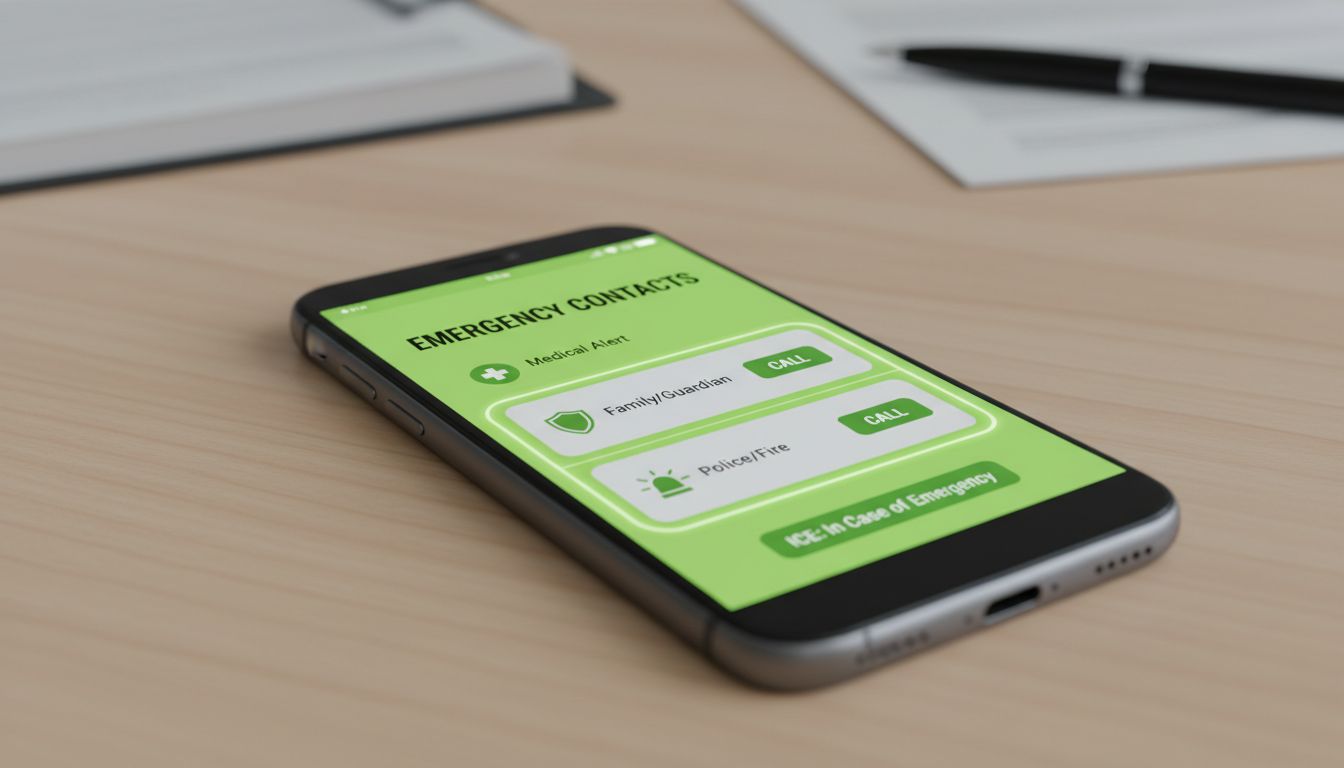
If you’re in the US, you can contact the 988 Suicide & Crisis Lifeline by calling or texting 988 (24/7). If someone is in immediate danger, call 911.
Step 9: Encourage professional support without making it sound like rejection 🧑⚕️
A common mistake is saying “You need therapy” in a way that implies “You’re too much for me.”
Try a warm handoff:
- “I care about you a lot, and this feels bigger than what love alone can solve. You deserve real support.”
- “Would you be open to talking to a professional if I help with the steps?”
If they resist, don’t force it. Make it easier:
- Offer to find 2–3 options
- Offer to sit with them during the booking
- Offer online vs in-person flexibility
This internal guide can help you choose a format: Online therapy vs in-person therapy: how to choose what fits.
If you want structured, supportive guidance through a difficult season, you can also explore Ngọc Tĩnh’s service: Explore “Đồng Hành Cùng Tiên” support service.
Step 10: Protect your energy (so you don’t become resentful) 🧱
Let’s be honest: caregiving without boundaries turns into burnout—and burnout turns into irritability, which your loved one will interpret as judgment.
Use “boundary + care” language
- “I can stay on the phone for 20 minutes, and then I need to sleep—but I’ll text you in the morning.”
- “I can help with groceries today. I can’t manage everything, but I’m not leaving you alone in this.”
Build a small support network
Depression support shouldn’t be a one-person job.
- One other family member
- One close friend
- One professional point of contact
If your loved one’s relationships are harmful or draining, this may also be relevant: How to recognize a toxic relationship when love becomes a burden.
A “say this / don’t say this” script you can use today 🧾

If they’re withdrawing
- Say: “I’ve noticed you’ve been quieter. I’m not mad. I miss you. Want company or space—with a check-in later?”
- Avoid: “You never talk to anyone anymore.”
If they cancel plans repeatedly
- Say: “No pressure. Do you want a smaller plan—like 15 minutes together?”
- Avoid: “You’re being flaky.”
If they’re crying or shutting down
- Say: “You don’t have to explain perfectly. I’m staying with you.”
- Avoid: “Stop crying” or “Calm down.”
If you’re scared and don’t know what to do
- Say: “I’m not sure what the right move is, but I’m here. Can we take the next step together?”
- Avoid: “You’re stressing me out.”
Common mistakes that feel helpful but increase shame 😬
| Mistake | What they hear | Better move |
|---|---|---|
| Over-teaching (lectures, podcasts, “fixing”) | “I’m broken” | Ask permission before advice |
| Comparing (someone else had it worse) | “I’m weak” | Validate their reality |
| Pushing productivity | “My worth = output” | Focus on function, not achievement |
| Taking it personally | “I’m a burden” | Separate symptoms from love |
| Being overly cheerful | “My pain is inconvenient” | Match tone: calm, steady |
A practical 7-day checklist (doable, not perfect) ✅
| Day | What you do | Message to send (copy/paste) |
|---|---|---|
| Day 1 | Ask permission + validate | “Do you want to talk now or later? I’m here either way.” |
| Day 2 | Offer 2 concrete help options | “Food delivery or I bring something by?” |
| Day 3 | Tiny activity together | “10-minute walk or sit outside?” |
| Day 4 | Gentle symptom check | “What part of the day is hardest this week?” |
| Day 5 | Reduce admin burden | “Want me to help you book an appointment or look up options?” |
| Day 6 | Build support network | “Is there one person you’d be okay adding for support?” |
| Day 7 | Review what worked | “What helped most this week? What should we skip?” |
When depression might actually be something else (important nuance) 🔄
Some symptoms overlap with other conditions (like bipolar disorder). If your loved one has periods of unusually high energy, reduced need for sleep, impulsive behavior, or extreme mood swings, it’s worth learning the difference.
This internal resource is a solid starting point: Bipolar disorder explained: symptoms, manic vs depressive phases, early recognition.
Final takeaway: you’re aiming for “safe,” not “perfect” 💛
If you remember only one thing, make it this: depression support works best when your loved one feels emotionally safe—not evaluated, not corrected, not measured.
Your step-by-step north star:
- Calm yourself
- Ask permission
- Validate
- Ask low-shame questions
- Offer tiny concrete help
- Avoid shame language
- Make a simple plan
- Prioritize safety when needed
- Encourage professional support with warmth
- Hold boundaries so you can stay consistent
If you want to explore support options through Ngọc Tĩnh - Hỗ Trợ Tâm Lý, start here: Visit Ngọc Tĩnh - Hỗ Trợ Tâm Lý or Reach out through the contact page.