

Therapy Online Vs Therapy Trực Tiếp: Nên Chọn Hình Thức Hỗ Trợ Tâm Lý Nào?
Therapy online vs therapy trực tiếp: nên chọn hình thức hỗ trợ tâm lý nào? That’s a surprisingly practical question—because the “best” option isn’t a moral choice. It’s a fit choice. And if you pick the wrong fit, you might quit early, feel disappointed, or assume therapy “doesn’t work” for you (when the format was the real mismatch). 🧠
Before we compare, one important detail: in Vietnam you’ll often see the phrase “therapy online vs therapy trực tiếp” even when the audience is global. In this article, you’ll get a clear, US-oriented, evidence-informed breakdown—while keeping the real-world vibe of that original question.
What “online therapy” and “in-person therapy” actually mean (no fluff)
Online therapy (teletherapy) typically includes:
- Video sessions (most common)
- Phone sessions
- Secure chat or messaging (less common as a standalone clinical format)
In-person therapy means:
- You meet your therapist physically in an office, clinic, or private practice setting
- The session is typically 45–60 minutes with face-to-face communication
Both can be effective. But they don’t feel the same—and they don’t work equally well for every situation. ✅
Quick comparison: online vs in-person (the decision in one table)
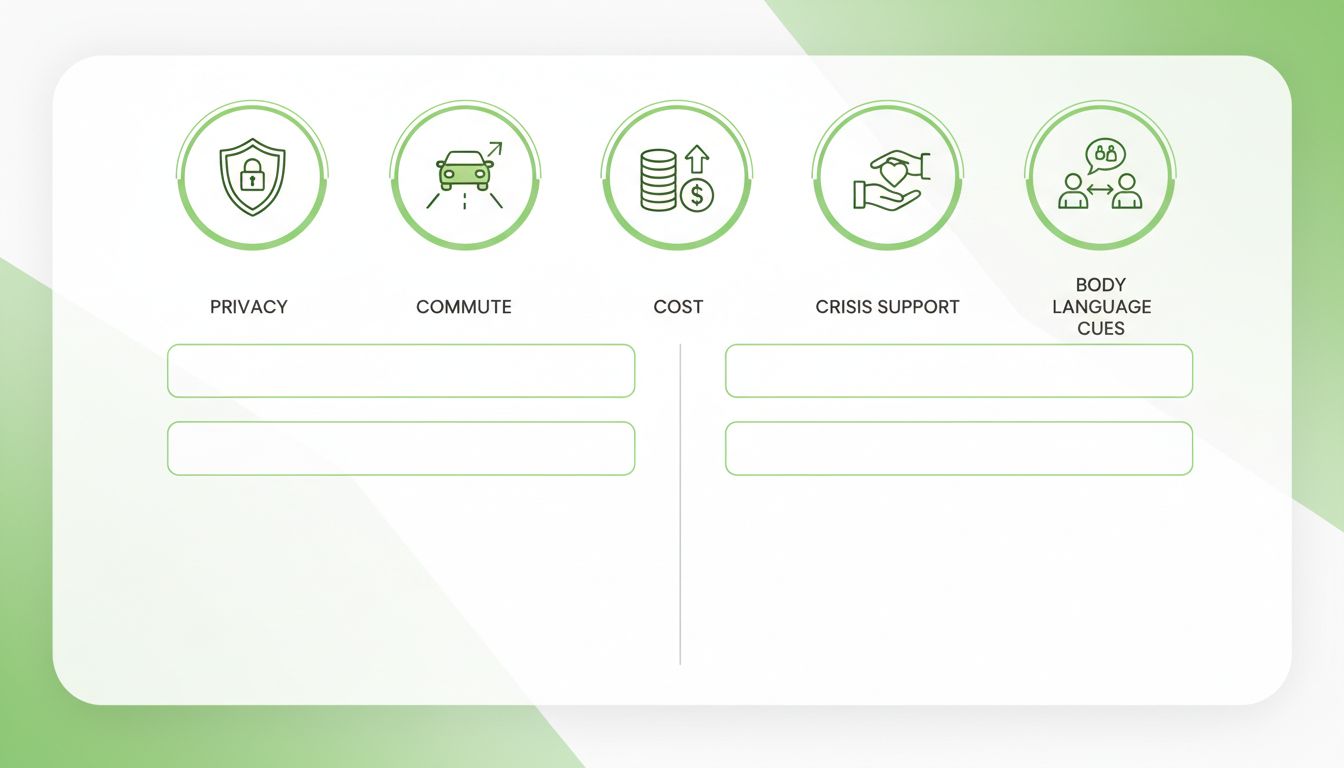
| Category | Online therapy (teletherapy) | In-person therapy (face-to-face) | What this means for you |
|---|---|---|---|
| Convenience | High—no commute, easier scheduling | Lower—travel + waiting room | If you’re busy or easily overwhelmed, online often increases consistency |
| Access | Great for rural areas, mobility limits, travel | Limited to local providers | Online widens your therapist options dramatically |
| Privacy | Depends on your environment + tech | Stronger environmental privacy (office) | If home isn’t private, online can backfire |
| Emotional safety | Can feel safer at home | Can feel more “contained” and supportive | Choose based on whether you need comfort or structure |
| Nonverbal cues | Some cues lost (camera, lag) | Strong—full body language, presence | In-person may help if you struggle reading/expressing emotion |
| Tech friction | Internet, devices, platforms | Minimal | If tech stress is real for you, don’t ignore it |
| Crisis suitability | Limited; safety planning needed | Better for higher-risk situations | If you’re in acute crisis, prioritize local/in-person support |
| Cost | Sometimes lower; varies | Often higher; varies | Price isn’t guaranteed—check your options |
The takeaway is clear: online therapy optimizes access and consistency, while in-person therapy optimizes containment, presence, and richer emotional signals.
Watch: a grounded overview that pairs well with this decision
Effectiveness: is online therapy “as good as” in-person? 📊
Let’s be honest—this is the big one. Most people don’t care about modality until they worry they’re choosing the “weaker” option.
Broadly speaking, research over the past decade has found teletherapy can be comparable to in-person therapy for many common concerns, especially when sessions are structured and consistent (think CBT for anxiety/depression). The difference often isn’t “does it work?” but:
- Will you show up regularly?
- Do you feel safe enough to be honest?
- Can you build a solid relationship with the therapist? (the therapeutic alliance)
The effectiveness equation (simple and real)
| Factor | Why it matters | Online vs in-person impact |
|---|---|---|
| Consistency | Repetition drives change—skills stick with practice | Online often wins (less friction) |
| Alliance (fit + trust) | Strong predictor of outcomes | Both can win—fit matters more than format |
| Emotional regulation | Some sessions get intense | In-person can feel more stabilizing for some people |
| Accountability | Avoidance is sneaky | In-person can reduce “easy cancellation” behaviors |
If you tend to cancel when life gets busy, online therapy can be the difference between progress and another “false start.” If you dissociate, shut down, or feel unsafe at home, in-person might be the better container.
When online therapy is the smarter choice ✅
Online therapy is especially strong if you:
- Have a demanding schedule (parents, students, caregivers, founders)
- Live far from quality providers or need language/cultural fit beyond your area
- Have chronic illness, disability, or limited mobility
- Feel more comfortable opening up from your own space
- Want to reduce the “activation cost” (commute, parking, waiting room stress)
- Travel often or split time across cities/states
Best-fit issues for online therapy
Online can be a great match for:
- Generalized anxiety, mild-to-moderate depression
- Stress/burnout and life transitions
- Self-esteem and identity exploration
- Relationship patterns (including boundary work)
- Skills-based approaches (CBT/DBT skills, mindfulness, habit change)
If you’re exploring supportive resources and mental health education alongside therapy, you can also browse the Ngọc Tĩnh blog library for practical topics that pair well with ongoing sessions.
When in-person therapy is the smarter choice ✅

In-person therapy is often the better call if you:
- Don’t have privacy at home (roommates, family, thin walls)
- Find video calls draining or emotionally “flat”
- Need stronger structure to stay engaged
- Feel disconnected from your body and benefit from co-regulation
- Are working through heavy trauma material and want stronger containment
Best-fit issues for in-person therapy
In-person can be particularly helpful for:
- Trauma work when safety/stability is a primary concern
- Severe depression with low functioning
- High anxiety with panic symptoms where grounding support matters
- Complex relational wounds where presence helps build trust
If you’re unsure whether you’re dealing with stress or something deeper, start with a clearer self-assessment. This internal read can help you label what’s happening: stress vs depression—how to tell the difference.
Privacy & safety: the deal-breaker most people ignore 🔒

Online therapy privacy depends on you as much as the platform.
Online privacy checklist
- Can you be alone for 50 minutes?
- Can you speak freely without being overheard?
- Do you have headphones?
- Is your internet stable enough to avoid repeated interruptions?
- Do you feel safe in your space (emotionally and physically)?
In-person privacy checklist
- Can you travel safely and consistently?
- Does the office feel comfortable (lighting, proximity, setting)?
- Do you worry about being seen entering the office? (stigma is real)
If privacy at home is shaky, don’t force online therapy and hope for the best. That’s a fast track to holding back—then wondering why therapy feels “surface level.”
Cost, insurance, and logistics: what you should evaluate (US-focused) 💵
Cost is not automatically cheaper online. In the US, pricing is shaped by:
- Therapist licensure + state rules (many therapists must be licensed in your state)
- Insurance network status (in-network vs out-of-network)
- Session length and specialty
- Platform fees (some marketplaces charge differently)
Practical cost comparison table
| Cost/Logistics item | Online therapy | In-person therapy |
|---|---|---|
| Commute cost/time | Usually none | Often significant |
| Scheduling flexibility | Higher | Lower |
| Missed-session risk | Lower if easy to attend; higher if you “ghost” | Sometimes lower because you’ve committed to travel |
| Insurance options | Can be limited by state/provider | Often broader locally |
The blunt truth: the cheapest therapy is the therapy you actually attend. If online keeps you consistent, it often wins financially over time.
“Therapy trực tiếp feels more real” — is that true?
Sometimes yes. Sometimes it’s just familiarity.
In-person therapy can feel more “real” because:
- You’re physically present with another human (strong nervous system cues)
- The office creates a ritual: arrive → session → leave → reflect
- Silence and micro-expressions are easier to hold without tech awkwardness
Online therapy can feel less “real” when:
- You multitask (even slightly)
- You’re in the same room where you work, scroll, and stress
- You don’t give yourself a transition before/after the session
If you choose online, make it feel real
- Sit at a dedicated spot (same chair, same time)
- Use headphones
- Put your phone away
- Do a 2-minute “arrival ritual” (breath + intention)
- After session: walk outside or journal for 5 minutes
That tiny structure can dramatically increase depth. 🌿
Decision guide: choose the right format for your situation (fast)
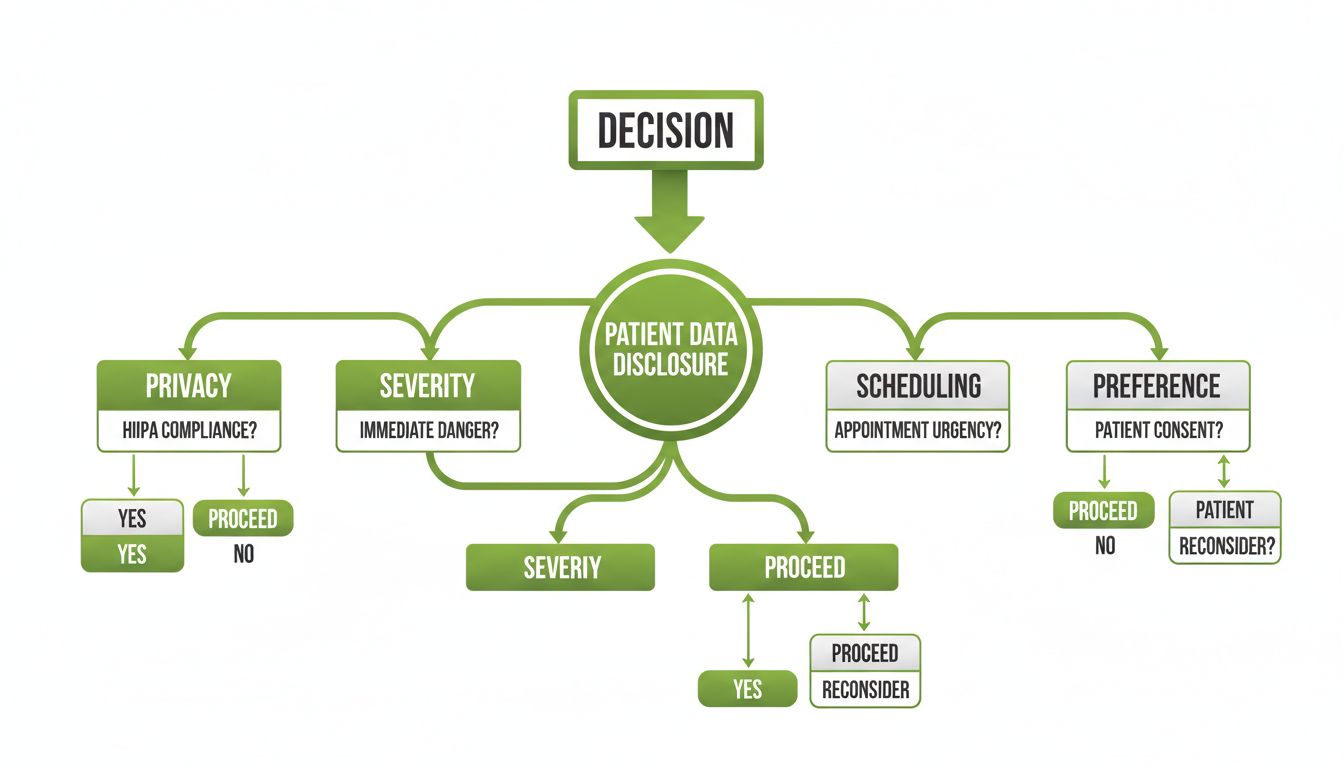
Choose online therapy if you say “yes” to most of these:
- “I can get privacy at home.”
- “I’m more likely to attend if it’s convenient.”
- “I want a wider choice of therapists.”
- “I feel safer opening up from my space.”
Choose in-person therapy if you say “yes” to most of these:
- “I don’t have a private space.”
- “I need stronger emotional containment.”
- “Video makes me shut down or dissociate.”
- “I’m dealing with intense symptoms and need extra support.”
Choose a hybrid approach if you can
A hybrid model (mostly online, occasional in-person) can be ideal when:
- You want flexibility but also value periodic in-person grounding
- You travel or have unpredictable weeks
- You’re starting therapy and want to build trust faster
Special cases: trauma, couples, and severe symptoms

Trauma work
Online can work, but it’s more demanding:
- You need a private, stable environment
- You benefit from strong safety planning and grounding skills
- You may prefer in-person for deeper processing phases
Couples therapy
Both can work. Online is convenient for busy couples, but in-person can reduce distractions and improve turn-taking. If you’re navigating unhealthy patterns, you’ll also benefit from learning how dynamics become harmful over time—this internal read is a strong companion: signs of a toxic relationship and what to do next.
Severe symptoms / crisis risk
If you’re experiencing active suicidal thoughts, self-harm urges, or you feel unsafe, prioritize immediate local help and consider in-person care where possible. Online therapy may still be part of your plan, but it shouldn’t be your only safety net.
What to ask a therapist before you commit (online or in-person)
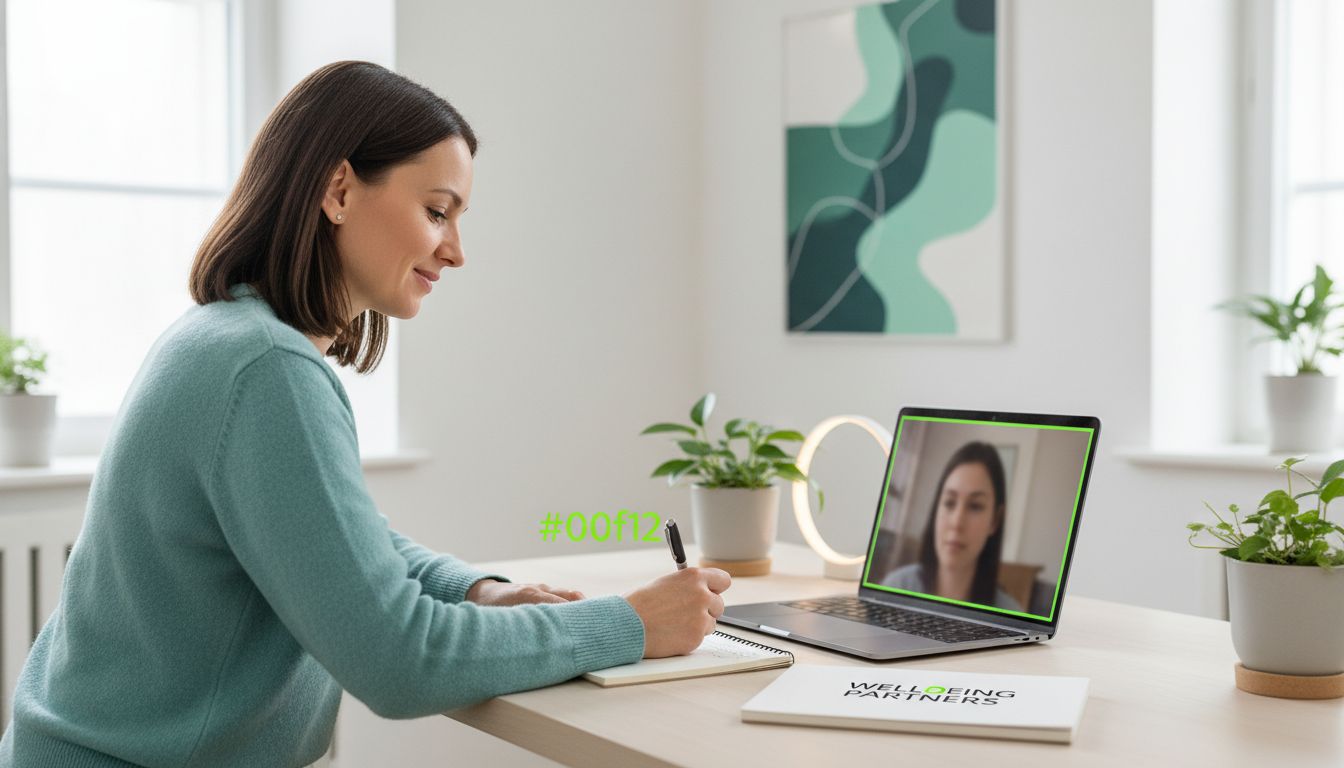
Bring these questions to a first session/consult:
- “What approach do you use (CBT, ACT, psychodynamic, trauma-informed, etc.)—and what does that look like weekly?”
- “How do you handle safety planning if I’m overwhelmed between sessions?”
- “What outcomes should I expect in 4–6 sessions if we’re a good fit?”
- “How do you measure progress—symptoms, behavior, relationships, self-trust?”
- “If this format isn’t working, how do we pivot?”
The point isn’t to interrogate. It’s to make sure you’re not walking into a vague process with no map.
Recommendation: how to choose without overthinking it 🧭
If you’re stuck in analysis paralysis, use this simple rule:
- Pick online therapy if access + consistency are your biggest barriers.
- Pick in-person therapy if privacy + emotional containment are your biggest barriers.
- If both are possible, start where you’re most likely to show up for 4 straight sessions. Momentum matters more than perfection.
And if you want a supportive space that’s built around empathy, steady guidance, and a healing-first mindset, explore Đồng Hành Cùng Tiên—Ngọc Tĩnh support services. When you’re ready to talk through your options or ask about fit, you can also reach out via the contact page.
FAQs (quick, practical)
Is online therapy legit?
Yes—when delivered by qualified providers using secure platforms and clear clinical boundaries. The key variable is therapist quality and your ability to create a private, focused environment.
Will I miss “energy” and body language online?
Sometimes. If you rely heavily on nonverbal cues or you shut down on video, in-person may feel more natural.
Is in-person always better for serious issues?
Not always—but it can be safer and more supportive when risk is high or when home is not a stable place to process emotions.
Can I switch formats later?
You should. A good therapy plan adapts. If online isn’t deep enough, move in-person. If in-person is too hard to attend consistently, move online.
Final takeaway
Therapy online vs therapy trực tiếp isn’t a battle. It’s a matching problem.
Choose the format that makes it easiest for you to:
- show up consistently,
- feel safe enough to be honest,
- and stay long enough for change to compound. ✨