

Nhật Ký Trị Liệu (Journaling) Để Chữa Lành: 30 Ngày
Journaling can be surprisingly “clinical” in the best way: it helps you slow down, name what’s happening inside you, and create small, repeatable moments of relief. And yes—you can absolutely use a 30-day structure to make it stick without turning it into another productivity chore. 📝✨

What “therapeutic journaling” is (and isn’t)
Therapeutic journaling is structured writing that helps you:
- process emotions instead of avoiding them
- untangle thoughts that loop (worry, shame, rumination)
- clarify needs, boundaries, and next steps
- build self-compassion and emotional regulation
What it isn’t:
- a requirement to write perfectly
- a place to “fix yourself” with positivity
- a substitute for professional care when you’re in crisis
If you’re unsure whether what you’re experiencing is stress or something deeper, read how to tell stress from depression so you can care for yourself correctly. The takeaway is clear: the right tool depends on what you’re dealing with.
Why journaling helps healing (the practical mechanism)
When you write, you’re doing three powerful things at once:
- Externalizing: thoughts stop feeling like “the whole truth” and become data on paper.
- Labeling emotions: naming feelings reduces intensity and improves regulation.
- Meaning-making: you connect events → interpretations → needs → actions.
This is why journaling often makes you feel lighter even if nothing “changed” externally. Your nervous system got a signal: “I’m safe enough to process.”
If your mind is loud, writing is a way to turn noise into language—and language into choices.
Step-by-step: Set up your healing journaling practice (in 15 minutes)
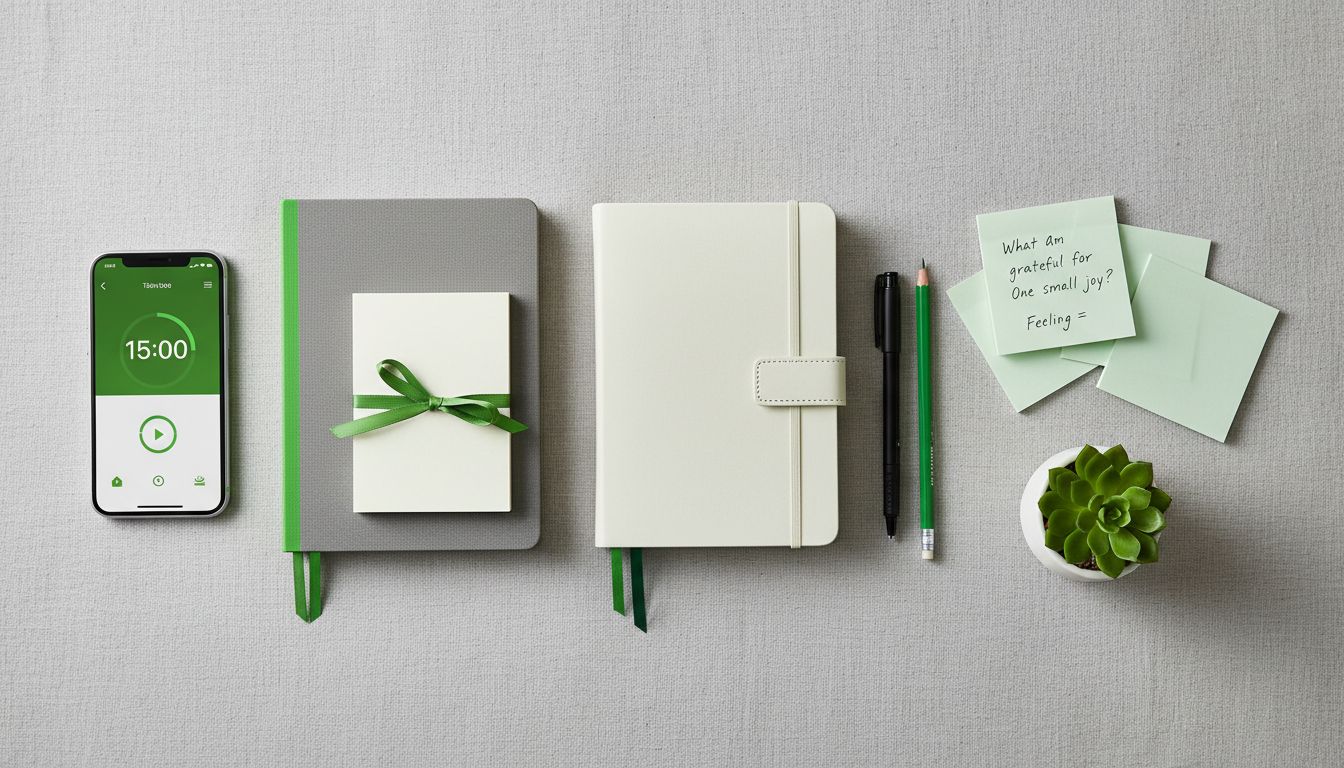
Step 1: Choose your “low-friction” format
Pick the format you’ll actually use on tired days:
- Notebook (best for emotional depth, fewer distractions)
- Notes app (best for consistency, quick entries)
- Voice-to-text (best if you freeze when you write)
Step 2: Pick a daily time anchor (not “whenever”)
Tie journaling to something you already do:
- after brushing teeth
- after morning coffee
- right after you get into bed (before scrolling)
Step 3: Use a timer (this is the secret sauce)
Set 7–12 minutes. Short enough to be doable, long enough to be real.
Step 4: Decide your rule for “bad days”
Example:
- “On bad days, I only write 3 lines.” That rule protects consistency—which is what creates change.
Step 5: Create a simple closing ritual
End with one of these:
- 1 slow breath + “I’m here.”
- one sentence: “What I need now is ___.”
- a tiny action: drink water, stretch, message a friend
Watch: a guided way to start journaling for healing 🎥
Sometimes you don’t need more theory—you need a gentle nudge and a structure you can follow.
The core method: 3-part journaling that works even when you’re overwhelmed
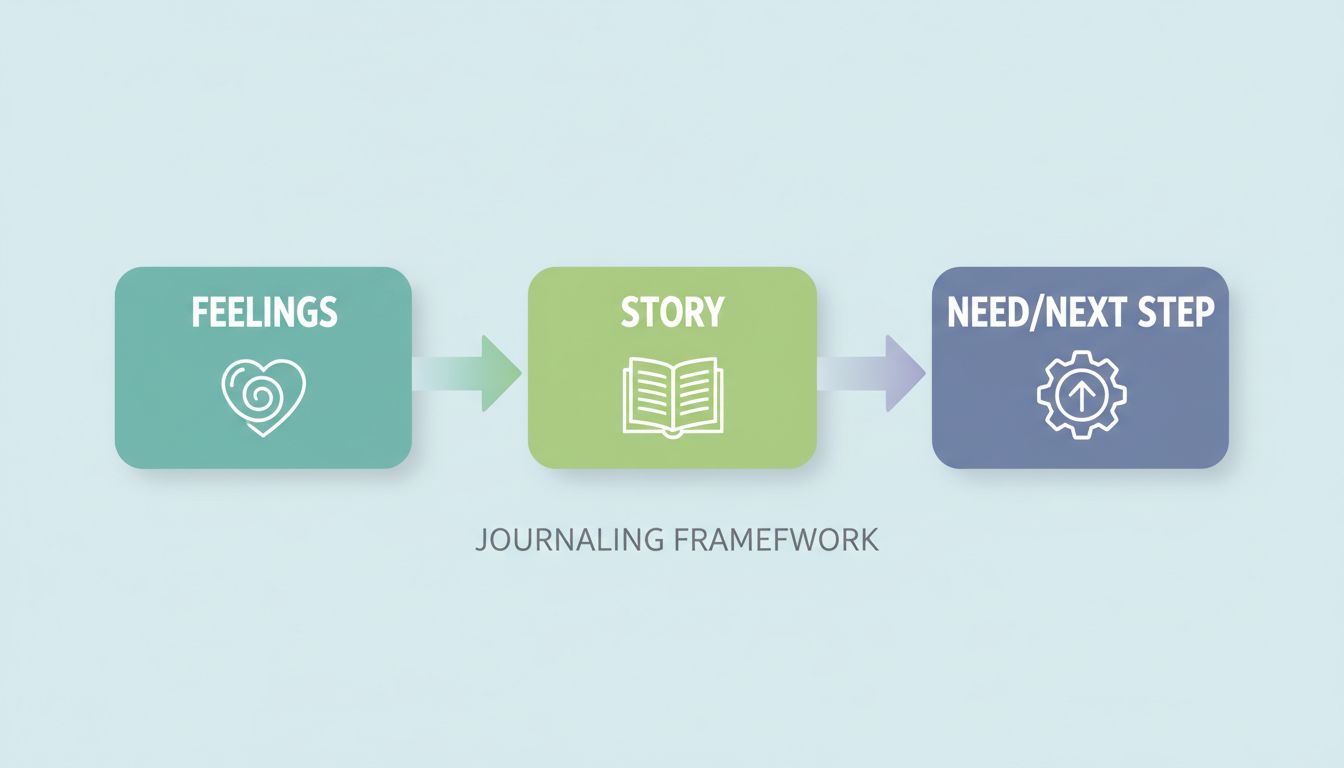
Use this template daily:
- What I feel (body + emotion):
“In my body I notice ___.”
“Emotionally I feel ___.” - What story my mind is telling:
“My mind says ___.”
“I’m afraid that ___.” - What I need / what I can do next:
“What I need is ___.”
“One small step I can take in 10 minutes is ___.”
This stops journaling from becoming endless venting—and turns it into healing + direction.
Question prompts (organized by what you actually need today)
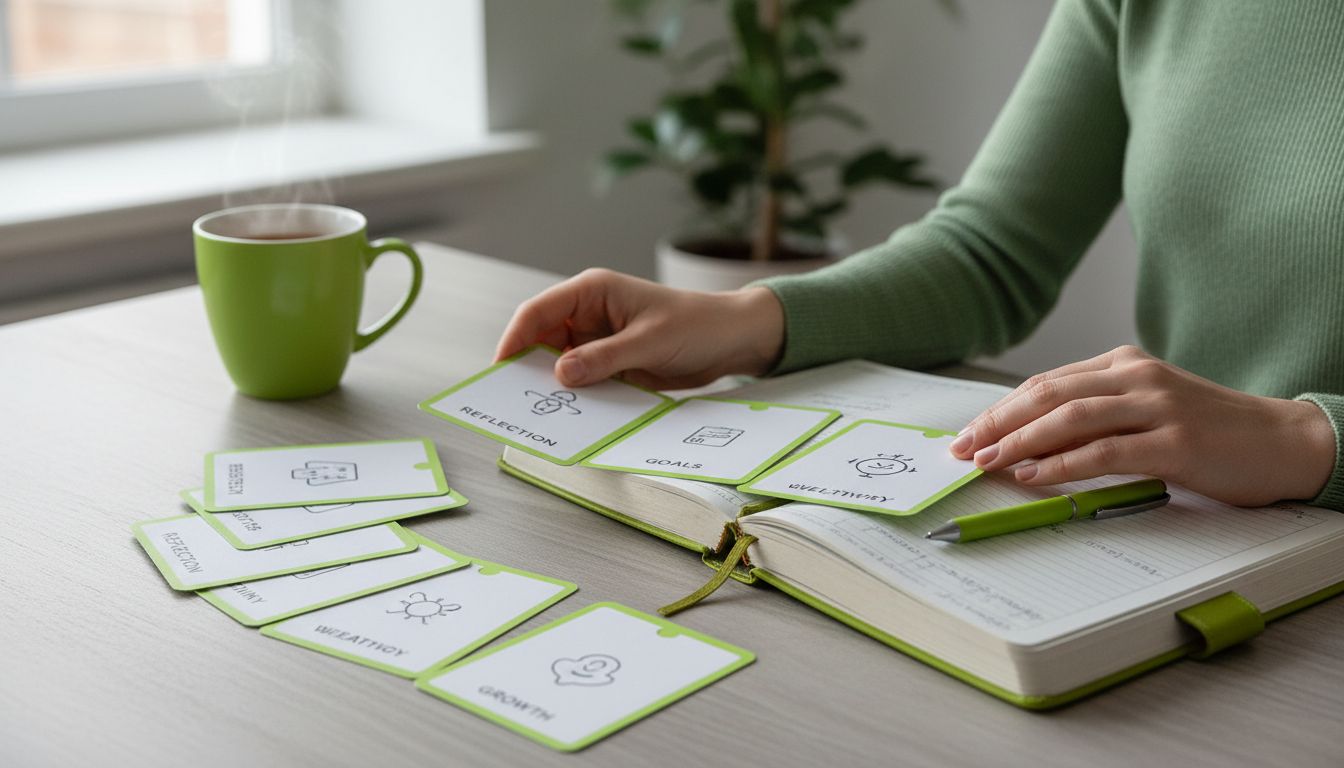
A) Prompts for emotional release 😮💨
- What am I carrying that I haven’t said out loud?
- If my emotion could speak, what would it ask for?
- What do I wish someone understood about me right now?
B) Prompts for anxiety and overthinking 🔁
- What exactly is the threat my brain is predicting?
- What evidence supports this fear? What evidence doesn’t?
- If my best friend had this thought, what would I tell them?
- What’s the smallest controllable piece of this situation?
C) Prompts for self-compassion 💛
- What part of me is trying to protect me (even if it’s messy)?
- What would “being gentle with myself” look like today?
- What would I forgive myself for if I believed I did my best?
D) Prompts for boundaries and relationships 🧩
- Where do I feel resentment? What boundary is missing?
- What do I keep tolerating that quietly harms me?
- What am I afraid will happen if I say “no”?
If you want a deeper foundation for boundaries and sustainable mental care, read how to build a mental self-care habit when you’re busy (sleep, food, movement, boundaries).
E) Prompts for burnout recovery 🔥
- What feels draining specifically (task, person, environment)?
- What am I doing that used to be optional but became mandatory?
- If I could remove one thing for 7 days, what would it be?
- What kind of rest am I missing: physical, emotional, social, sensory?
If burnout is your main struggle, pair journaling with a structured reset: a 7-day burnout recovery plan (signs, causes, and what to do next).
Ready-to-copy journaling templates (so you never stare at a blank page)
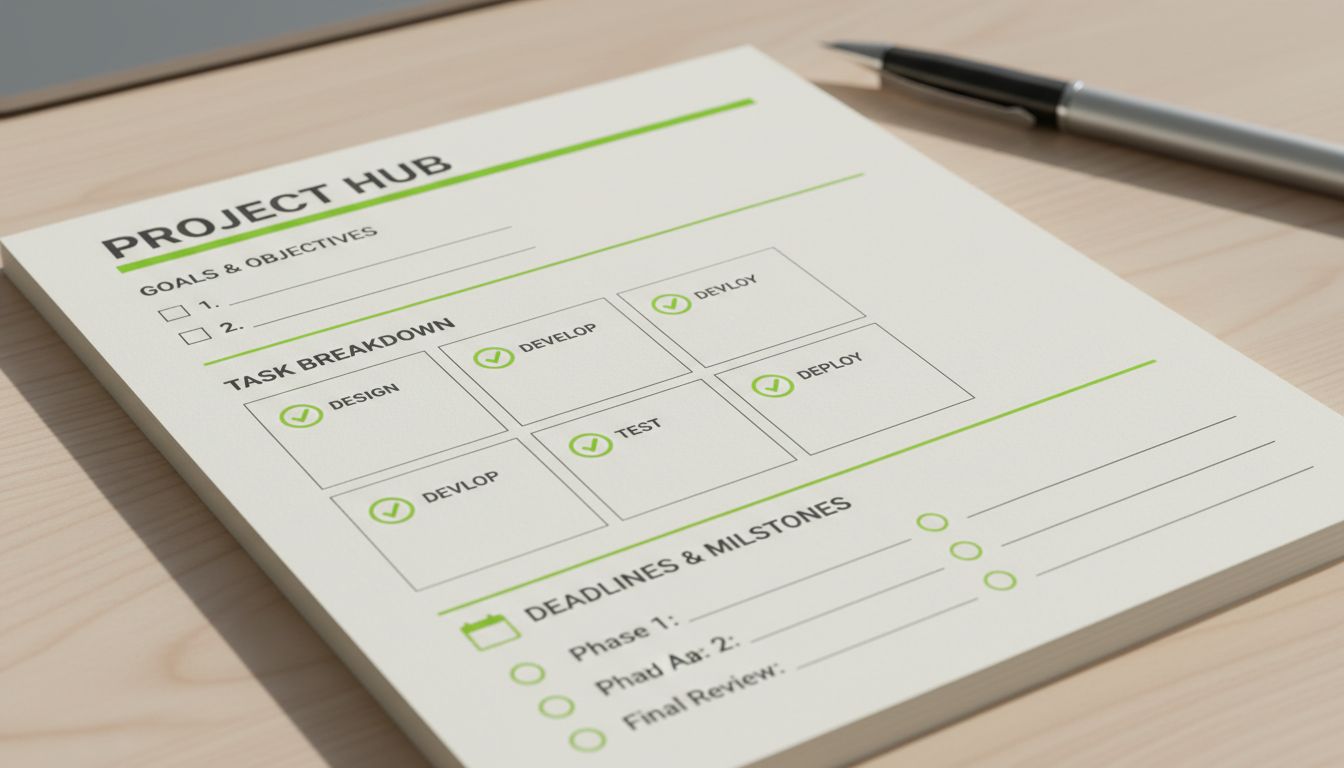
Template 1: The 10-minute “reset”
- Time/date:
- Right now I feel:
- What happened (facts only):
- What I’m telling myself it means:
- What I need:
- One kind thing I can do for myself today:
Template 2: “Trigger → Meaning → Repair”
- The trigger was:
- My immediate reaction was:
- This reminds me of:
- The fear underneath is:
- A more balanced interpretation could be:
- One repair step (boundary, request, rest, apology, support):
Template 3: Night journaling for calmer sleep 🌙
- 3 things I’m done with for today:
- 1 worry I’m parking for tomorrow:
- 1 thing I’m proud of:
- 1 thing I want to release:
- A sentence of reassurance I need to hear:
Template 4: The “inner dialogue” (parts work lite)
- A part of me says:
- Another part of me says:
- What both parts are trying to protect:
- What I (the whole me) choose today:
Your 30-day plan: exactly what to write each day (and why it’s sequenced)
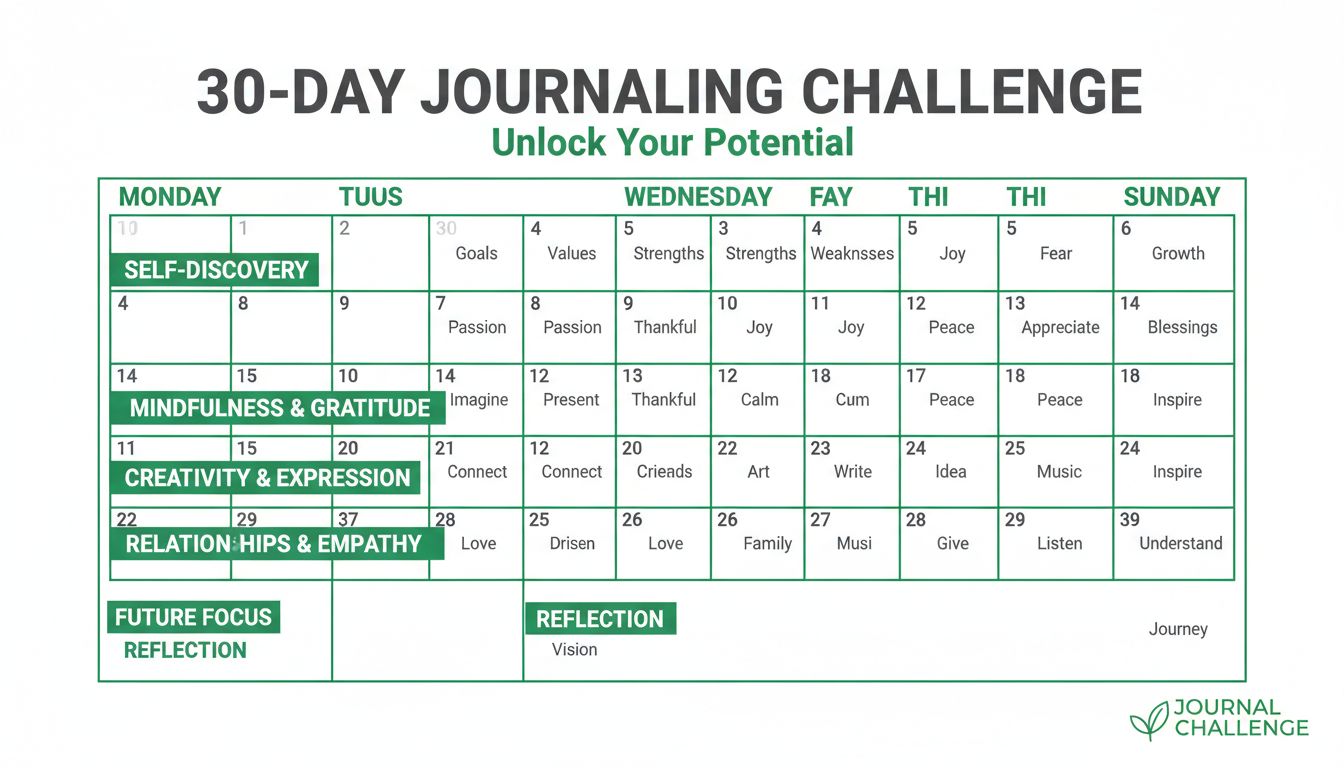
This is a progressive plan: you start with safety and awareness, then move into patterns, then boundaries, then integration.
Week-by-week focus (so your brain doesn’t rebel)
| Week | Focus | Goal | Daily time |
|---|---|---|---|
| 1 | Safety + emotional awareness | “Name it to tame it” | 7–10 min |
| 2 | Thoughts + patterns | Reduce loops and distortions | 10–12 min |
| 3 | Needs + boundaries | Turn insight into change | 10–15 min |
| 4 | Integration + future self | Keep results without perfectionism | 10–15 min |
30 days of prompts (copy/paste list)
Days 1–7: Stabilize
- What do I feel right now (emotion + body)?
- What’s one thing that made today heavier?
- What’s one thing that helped, even 1%?
- What am I avoiding thinking about? Why?
- What do I need more of: rest, clarity, connection, space?
- What would make tomorrow slightly easier?
- Weekly reflection: What did I learn about my stress signals?
Days 8–14: Understand patterns 8. What thought keeps repeating lately? 9. What’s the worst-case scenario my mind is rehearsing? 10. What’s the best realistic outcome? 11. What’s in my control vs not in my control? 12. What am I taking personally that might not be personal? 13. What expectation am I holding that’s hurting me? 14. Weekly reflection: What pattern showed up most?
Days 15–21: Needs + boundaries 15. Where am I over-giving? 16. What boundary would protect my peace this week? 17. What conversation am I postponing? 18. What do I need to ask for (clearly, specifically)? 19. What do I need to stop explaining? 20. What am I allowed to want (without earning it)? 21. Weekly reflection: What changed when I honored my needs?
Days 22–30: Integrate 22. What am I proud of this month (even small)? 23. What coping skill worked best for me? 24. What situation still feels unresolved—and what’s one next step? 25. What would my future self thank me for doing today? 26. What does “enough” look like in my life right now? 27. What am I ready to release? 28. What values do I want to live by this week? 29. Create a “bad day plan” in 5 lines. 30. Monthly reflection: What do I want to continue for the next 30 days?
How to maintain journaling for 30 days (without relying on motivation)
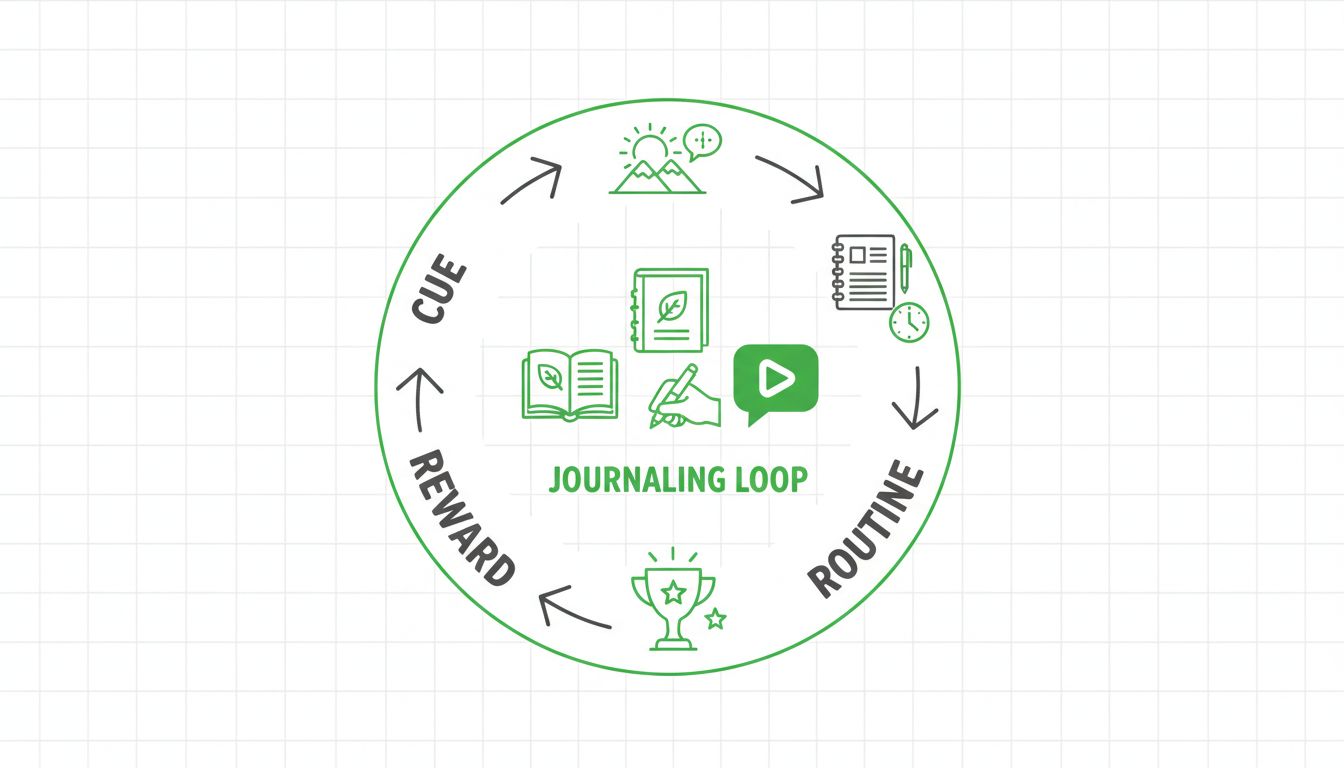
Let’s be honest: motivation is flaky. Systems work.
1) Make it ridiculously easy
- Keep the journal visible (on pillow, desk, nightstand)
- Use a tiny minimum (3 lines counts)
- Write imperfectly on purpose once—break the “must be good” spell
2) Use the “If-Then” plan
- If I don’t feel like writing, then I write:
“Today is hard. I don’t know what to say. What I need is ___.”
3) Track consistency, not word count ✅
Use a simple tracker:
| Day | Wrote? | Minutes | Mood before | Mood after |
|---|---|---|---|---|
| 1 | ||||
| 2 | ||||
| 3 | ||||
| … | ||||
| 30 |
This becomes your personal “data visualization” of healing: you’ll often see mood-after improve even when mood-before is rough.
4) Prevent the two most common failure points
- All-or-nothing thinking: missed a day? Resume the next day. No “restart.”
- Venting spiral: if you feel worse after writing, end with:
“One supportive action I’ll take now is ___.”
What to do when journaling brings up intense emotions

If writing opens the floodgates, don’t force depth. Shift to grounding + containment:
- Write facts only: “Today I did ___. I spoke to ___. I ate ___.”
- Use a container line: “I’m not solving this tonight. I’m noticing it.”
- Do 60 seconds of regulation: cold water on hands, slow exhale, feet on floor
If you’re experiencing thoughts of self-harm, feel unsafe, or can’t function day-to-day, journaling shouldn’t be your only support. Reach out to local emergency services or a licensed professional in your area.
Make journaling even more therapeutic: combine it with support
Journaling helps you generate insight. Support helps you turn insight into lasting change—especially when you’re stuck in the same loops.
If you want guided support, explore Ngọc Tĩnh - Hỗ Trợ Tâm Lý services and ways to work together. When you’re ready to talk, contact Ngọc Tĩnh - Hỗ Trợ Tâm Lý to book support.
Quick-start checklist (do this today) ✅
- Choose your format (notebook/phone/voice)
- Pick one daily anchor time
- Set a 10-minute timer
- Copy one template above
- Commit to “3 lines on bad days”
- Start Day 1 prompt: What do I feel right now (emotion + body)?
If you want more mental wellness guides, browse the Ngọc Tĩnh - Hỗ Trợ Tâm Lý blog.