

Coaching Phát Triển Bản Thân Vs Tư Vấn Tâm Lý: Khác Nhau Gì Và Khi Nào Nên Chọn?
You’ve probably typed (or thought) this exact question: “coaching phát triển bản thân vs tư vấn tâm lý: khác nhau gì và khi nào nên chọn?” And let’s be honest—online advice often blurs the line until everything sounds the same.
They’re not the same. And choosing the wrong one can waste months, money, and emotional energy. This guide breaks the two options down side-by-side so you can pick the right support—based on your goals, symptoms, and what you actually need right now. 🧠✨

Quick definition (no fluff)
Personal development coaching (coaching phát triển bản thân) helps you move forward: set goals, change habits, improve performance, build confidence, make decisions, and stay accountable.
Psychological counseling/therapy (tư vấn tâm lý/psychotherapy) helps you heal and stabilize: understand emotional patterns, process pain/trauma, reduce symptoms (anxiety, depression, burnout), and improve your mental health functioning.
The overlap is real (both involve conversations and change). But the core purpose is different.
Coaching vs counseling: side-by-side comparison (the part you came for)
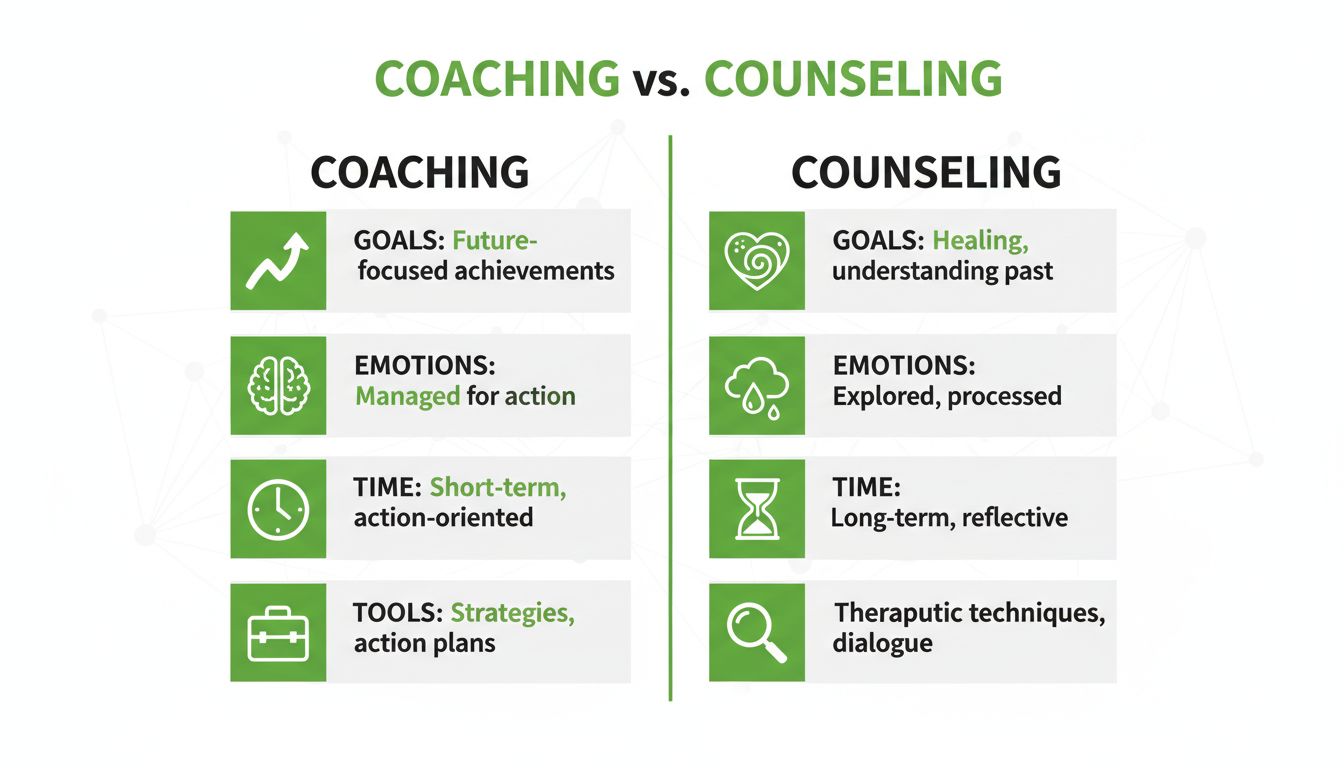
| Dimension | Personal Development Coaching | Psychological Counseling/Therapy |
|---|---|---|
| Primary focus | Future-oriented growth and performance | Emotional wellbeing, healing, symptom reduction |
| Best for | Goals, habits, confidence, career direction, productivity | Anxiety, depression, trauma, grief, relationship wounds, chronic stress |
| Starting point | “Where do you want to go?” | “What’s hurting, and why does it keep happening?” |
| Typical outcomes | Clarity, action plans, accountability, skill-building | Emotional regulation, insight, relief, healthier coping, improved functioning |
| Tools commonly used | Goal-setting frameworks, accountability, behavioral experiments, strengths-based work | Evidence-based therapy approaches, emotional processing, attachment work, coping skills |
| Pace & structure | Often structured, milestone-driven | Can be structured or exploratory; often deeper and gradual |
| Risk level | Lower—unless mental health issues are mislabeled as “motivation problems” | Higher responsibility—handles clinical concerns and safety planning |
| When it’s not enough | If you’re experiencing persistent symptoms, trauma triggers, or impairment | If you mainly want execution/accountability for clear goals |
The takeaway is clear: coaching is great when you’re basically stable and want traction; therapy is essential when your mental health is getting in the way of living normally.
The most common confusion (and why it matters) ⚠️
A lot of people seek coaching when they actually need counseling because:
- “I don’t want to feel broken.”
- “I just need discipline.”
- “I don’t want to talk about the past.”
But here’s the blunt truth: if your nervous system is overwhelmed, no productivity system will save you. You can’t habit-stack your way out of unresolved trauma or major depression.
On the flip side, some people start therapy when what they really need is:
- clearer goals
- a plan
- accountability
- decision-making support
Both are valid. The key is matching the method to the problem.
When coaching phát triển bản thân is the better choice ✅

Choose coaching if most of these are true:
- You’re functioning “okay” day-to-day (work/school/social life are mostly manageable).
- You have a goal but struggle with consistency.
- You’re stuck in overthinking and need structure + action.
- You want to improve leadership, communication, confidence, or time management.
- You want a future plan: career change, personal brand, life direction.
- You respond well to deadlines, accountability, and measurable progress.
Examples of coaching-friendly goals
- “I want a healthier routine and need a system I’ll actually follow.”
- “I’m switching careers and need clarity + a roadmap.”
- “I want to stop procrastinating and execute.”
- “I want to improve boundaries at work without burning bridges.”
When tư vấn tâm lý (therapy/counseling) is the better choice 🧩

Choose therapy if you’re dealing with any of the following:
- Persistent anxiety, panic, or constant dread
- Depressive symptoms (low mood, hopelessness, loss of pleasure)
- Sleep issues tied to stress or intrusive thoughts
- Trauma symptoms (flashbacks, hypervigilance, emotional numbness)
- Grief that feels stuck
- Relationship patterns that keep repeating painfully
- Emotional dysregulation (anger spikes, shutdown, dissociation)
- You feel “high-functioning” but internally falling apart
If you’re unsure whether it’s “stress or depression,” read this internal guide: How to tell stress from depression (and choose the right self-care).
🚨 Red flags: when you should prioritize therapy (or clinical help) immediately
If any of these apply, therapy is the safer first step:
- You’re having thoughts of self-harm or suicide
- You can’t perform basic daily tasks (getting out of bed, eating, hygiene)
- You’re using substances to cope more often than you want to admit
- Your relationships are deteriorating fast because of mood swings or anger
- You’re experiencing symptoms that may indicate a mood disorder
For deeper reading on bipolar disorder (often misunderstood and mislabeled), see: Understanding bipolar disorder with compassion.
If you’re in immediate danger or considering harming yourself, contact emergency services in the US (911) or call/text 988 (Suicide & Crisis Lifeline).
The “past vs future” myth (and what’s actually true)
People often say:
- Coaching = future
- Therapy = past
Reality: good therapy also builds the future (skills, boundaries, healthier choices). And good coaching sometimes touches the past (beliefs, identity, patterns).
The difference is depth and intention:
- Therapy explores the past to reduce suffering and improve mental health functioning.
- Coaching references the past only as needed to remove obstacles to execution.
What sessions typically feel like (so you’re not surprised)
| What you’ll notice | Coaching | Therapy/Counseling |
|---|---|---|
| Conversation style | More directive and action-oriented | More exploratory and emotionally attuned |
| Homework | Often structured action steps | Sometimes skills practice, journaling, exposure work, reflection |
| “Success” measurement | Progress toward goals and consistency | Symptom relief, emotional capacity, relationship stability |
| Common feeling after sessions | Energized, clear, ready to do | Lighter, understood—or sometimes emotionally tired but relieved |
Can you do both coaching and therapy? Yes—and it’s often the best combo 🤝

You can combine them when:
- Therapy helps you stabilize and heal
- Coaching helps you execute goals once your foundation is steadier
A practical sequence many people follow:
- Therapy first (regulate, process, understand patterns)
- Coaching next (build systems, pursue goals, expand identity)
Or in some cases, both in parallel—but only if roles are clear and you’re not overloading yourself.
A simple decision flow you can use today (no overthinking) ✅
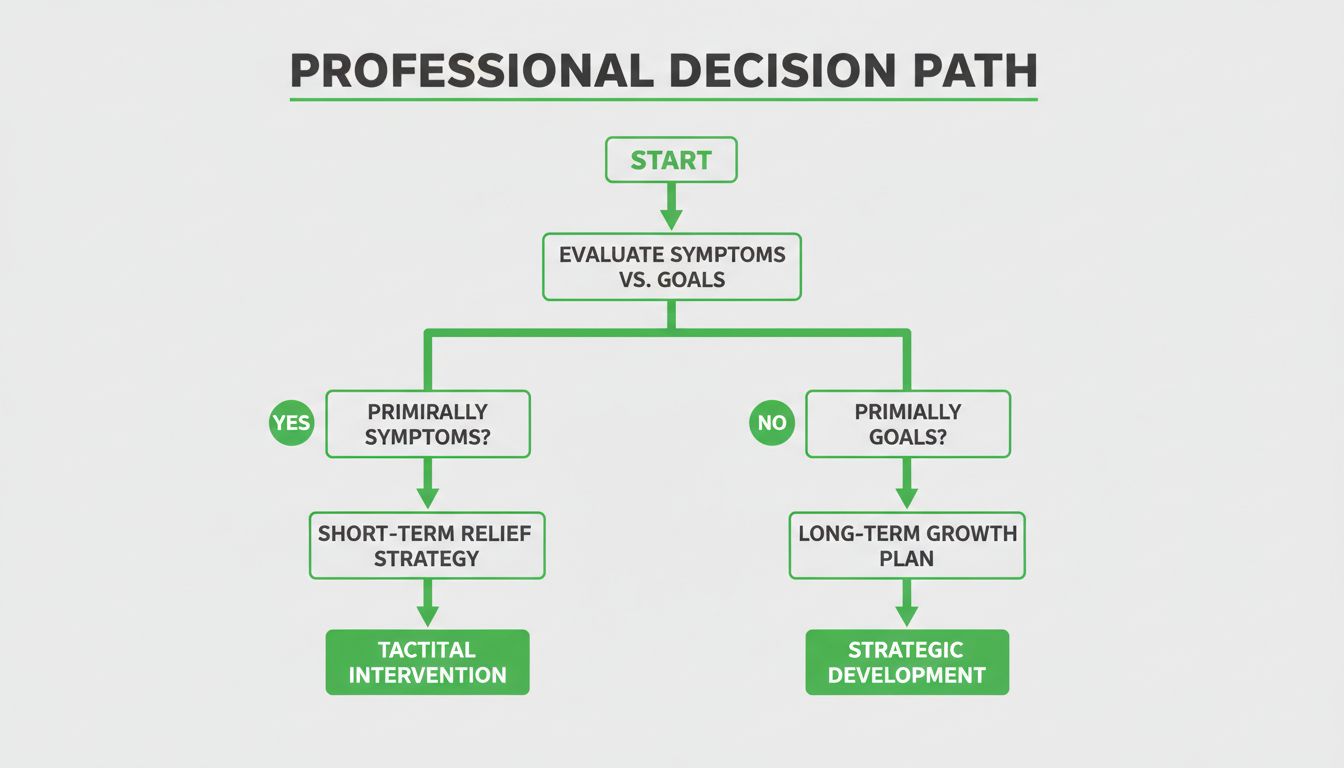
| Question | If “Yes” | If “No” |
|---|---|---|
| Are you experiencing persistent anxiety/depression/trauma symptoms? | Choose therapy/counseling | Go to next question |
| Is your daily functioning noticeably impaired? | Choose therapy/counseling | Go to next question |
| Do you mainly need clarity, accountability, and action steps? | Choose coaching | Go to next question |
| Are relationships/past wounds strongly driving current problems? | Choose therapy/counseling | Coaching may fit |
Video: a helpful perspective before you choose 🎥
What to look for in a provider (so you don’t waste time)

If you choose coaching
Look for:
- A clear methodology (not just “positive vibes”)
- Experience with goals similar to yours (career, habits, leadership)
- Transparent boundaries: coaching is not a substitute for clinical therapy
- Accountability structure you can realistically follow
If you choose therapy/counseling
Look for:
- Ethical standards, confidentiality, clear informed consent
- A style that fits you (directive vs gentle; skills-based vs depth-oriented)
- Cultural sensitivity and a non-judgmental approach
- A plan for measuring progress (symptoms, coping, relationships)
Where Ngọc Tĩnh fits in (and how to start)

Ngọc Tĩnh – Hỗ Trợ Tâm Lý is built for the moments you don’t want to carry alone—when you need emotional support, clarity, and a grounded space to heal and grow. 🌿
- If you want to explore support options and what fits your situation: Explore the blog and mental health resources.
- If you’re ready to see what working together looks like: View “Đồng Hành Cùng Tiên” support service.
- If you want to ask a question or start privately: Contact Ngọc Tĩnh to book a session.
FAQ: coaching phát triển bản thân vs tư vấn tâm lý (quick answers)
Is coaching the same as therapy?
No. Coaching is primarily goal + performance + accountability. Therapy is mental health care focused on emotional healing and symptom reduction.
What if I don’t know whether my problem is “mental health” or “motivation”?
If you’re not sure, start with a mental health screening approach—therapy/counseling is the safer entry point. If it turns out you’re stable and need execution, you can shift to coaching.
Can therapy be practical and action-oriented?
Absolutely. Many therapists integrate skills training, behavioral strategies, and structured plans—especially for anxiety, stress, and relationship boundaries.
I’m dealing with relationship stress—coaching or therapy?
If the relationship pattern is painful, repetitive, or tied to attachment wounds/trauma, therapy is usually the better choice. You might also like: How to recognize a toxic relationship and protect yourself.
Final takeaway
If you’re choosing between coaching phát triển bản thân vs tư vấn tâm lý: khác nhau gì và khi nào nên chọn?—use this rule:
- Choose coaching when you’re emotionally stable enough and need traction, structure, and accountability. 🚀
- Choose therapy/counseling when you need healing, stabilization, and deeper emotional support. 🧠💛
And if you’re still torn, don’t force certainty. Start the conversation, describe your symptoms and goals honestly, and let the right path reveal itself—one grounded step at a time.