

Chọn Hình Thức Hỗ Trợ Tâm Lý Cá Nhân Hay Nhóm: Ưu Nhược Điểm Và Ai Phù Hợp
Choosing between individual vs. group psychological support is one of those decisions that looks simple on the surface—until you’re the one paying for it, scheduling it, and showing up with real emotions on the line.
And if you’re searching for “chọn hình thức hỗ trợ tâm lý cá nhân hay nhóm: ưu nhược điểm và ai phù hợp”, here’s the direct translation of what you’re really asking:
Should you choose 1:1 support or group support—and what are the trade-offs, who fits what, and how do you decide without wasting time or money? 🧠

Quick definition (so you’re not comparing apples to oranges)
Individual psychological support (1:1) = you work privately with a mental health professional (or trained support practitioner) focused on your goals, your history, your pace.
Group psychological support = you meet with a facilitator and several participants who share a theme (anxiety skills, grief, burnout recovery, communication, etc.). You learn through both guidance and peer interaction.
Let’s be honest: both can work. But they work for different people, different problems, and different stages.
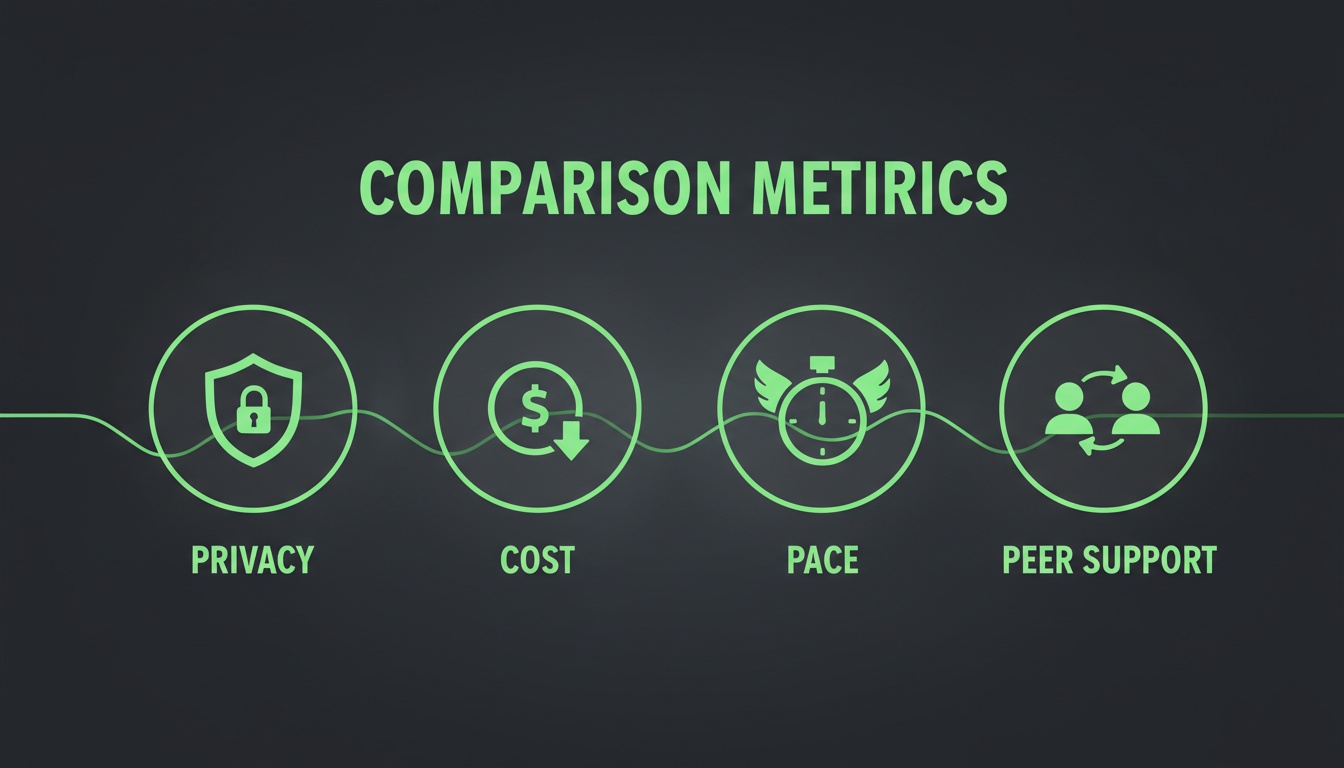
Side-by-side comparison (the “at-a-glance” decision tool)
| Dimension | Individual support (1:1) | Group support |
|---|---|---|
| Privacy 🔒 | Highest privacy; easier to share sensitive topics | Lower privacy; you choose what to disclose |
| Personalization 🎯 | Fully tailored to you | Semi-tailored; theme-based |
| Pace ⏱️ | Your speed; can go deep quickly | Group pace; may move slower or broader |
| Learning style 📚 | Reflection + targeted feedback | Skills + shared stories + social learning |
| Emotional safety 🧩 | Strong containment; best for high vulnerability | Can be powerful, but requires comfort around others |
| Cost 💵 | Typically higher per session | Typically lower per session |
| Accountability ✅ | High via 1:1 relationship | High via peer motivation + group structure |
| Social support 🤝 | Limited to practitioner | Built-in community; reduces isolation |
| Best for | Complex, personal, trauma-related, relationship patterns | Skill-building, normalization, connection, practicing communication |
The takeaway is clear: Choose 1:1 when you need depth, privacy, and precision. Choose group when you need skills, community, and normalization—often at a lower cost.
Individual support: key advantages (and what people don’t tell you)

1) You get a plan built around your nervous system—not a generic theme
In 1:1, your facilitator can adapt in real time:
- when you shut down
- when you overthink
- when you dissociate or spiral
- when you avoid the “real topic” (yes, everyone does this sometimes)
That personalization is hard to replicate in groups.
2) You can go deep safely (this is the big one)
If your story includes:
- trauma
- shame-heavy experiences
- complicated family dynamics
- intrusive thoughts you’re scared to say out loud
…private support often creates the safest container.
3) You control the agenda
In groups, you might spend time listening to topics that don’t apply to you. In individual work, you’re not sharing airtime.
Downsides of individual support (be blunt about it)
- Cost is usually higher.
- If you rely only on 1:1, you may miss the healing effect of peer normalization (“Oh wow, it’s not just me.”).
- Progress can feel abstract if you need real-world practice with people.
Group support: why it can be surprisingly powerful

1) Normalization hits different in a group 🤝
You can intellectually know you’re not alone… but hearing someone else describe your exact fear reduces shame fast.
Group support often helps with:
- social anxiety (gradual exposure)
- loneliness and isolation
- self-criticism (“I’m broken” thinking)
- relationship skill practice
2) You learn by watching others (social learning is real)
You don’t only learn from the facilitator—you learn from:
- how others set boundaries
- how others name emotions
- how others recover after a trigger
That’s a shortcut many people underestimate.
3) Cost-to-value can be excellent 💵
For structured programs (skills-based groups), you often get:
- a curriculum
- worksheets
- guided practice
- community
…at a lower per-session cost than 1:1.
Downsides of group support (the honest version)
- Less privacy. Even with confidentiality agreements, you can’t control what others remember or how safe they feel.
- Less individualized pacing. If you need to slow down, the group may move on.
- Group dynamics can be activating—dominant talkers, silence, comparison, or feeling “behind.”
Who should choose which? (Practical matching, not vague advice)
You’re likely a better fit for individual support if…
- You have a specific, personal issue you don’t want to share publicly (relationship rupture, sexual concerns, identity questions, family conflict).
- You feel emotionally unsafe in groups or struggle to speak up.
- Your symptoms are intense: panic, emotional flooding, severe insomnia, recurring intrusive thoughts.
- You want highly targeted guidance and measurable progress.
- You’re processing trauma or chronic shame patterns.
If you’re unsure whether it’s “serious enough,” use this as a reality check: Understand when it’s time to seek psychological support.
You’re likely a better fit for group support if…
- Your biggest pain is feeling alone in what you’re going through.
- You want skills for anxiety, stress, emotional regulation, boundaries, communication.
- You learn best by listening, reflecting, and practicing with others.
- You’re budget-conscious but still want structured support.
- You want accountability that comes from community.
You might do best with a hybrid approach if…
This is often the highest-impact path:
- Start with 1:1 to stabilize + clarify goals
- Add group work to practice skills + reduce isolation
- Return to 1:1 when new layers appear
Decision framework: 7 questions that make the answer obvious

Answer quickly—don’t overthink:
- Do you need privacy to speak freely?
- Yes → 1:1
- No → group could work
- Is your main goal skill-building or deep personal processing?
- Skills → group
- Deep processing → 1:1
- Do you freeze or people-please in groups?
- Yes → 1:1 first
- No → group may be great exposure practice
- Are you currently in crisis or feeling unstable?
- Yes → 1:1 first (stabilize)
- No → group can be a strong start
- Do you want feedback tailored to your specific relationships and history?
- Yes → 1:1
- No / general learning → group
- Does your schedule change often?
- Often → 1:1 may be easier to reschedule (depends on provider)
- Stable → group structure is fine
- What would you regret more: not getting enough personalization, or not getting community?
Your regret answer is usually your answer.
What outcomes can you realistically expect? (Time, depth, results)

Let’s be honest: outcomes depend on fit, consistency, and the facilitator. But here’s a grounded expectation-setting table:
| Outcome type | Individual support (1:1) | Group support |
|---|---|---|
| Symptom relief (stress/anxiety) | Often faster when personalized | Strong when skill-based and consistent |
| Insight & pattern change | High | Medium (varies by group format) |
| Confidence in social settings | Medium unless practiced intentionally | High (built-in practice) |
| Shame reduction | High with trust | Very high via normalization |
| Long-term behavior change | High when goals are clear | High when homework + accountability exist |
Common mistakes when choosing (and how to avoid them) ⚠️

Mistake 1: Choosing group support when you actually need stabilization
If you’re frequently overwhelmed, dissociating, or in acute crisis, a group may feel too exposed.
Mistake 2: Choosing 1:1 when your main need is connection
Some people do amazing insight work in private… then still feel lonely and stuck in real relationships. Group work can bridge that gap.
Mistake 3: Using friends/family as your only “support system”
Friends matter—but they’re not trained, not neutral, and often can’t hold heavy content safely. If you’re leaning on loved ones for everything, read: Why talking to loved ones isn’t always enough—and safer alternatives.
How to pick a provider or program (without getting stuck in research mode)
Whether you choose 1:1 or group, use these criteria:
- Clarity of scope: What problems do they work with? What’s not included?
- Structure: Is it open-ended support or a structured curriculum?
- Confidentiality standards: Especially for groups.
- Modality fit: CBT vs ACT vs DBT vs psychodynamic, etc. If you want the differences explained clearly: Compare common therapy approaches and who they fit.
- Your felt sense: After a first session, do you feel safer, clearer, and more grounded?
And yes—preparing well for the first session changes everything. Bring the right questions and expectations: How to prepare for your first psychological consultation.
If you’re choosing support at Ngọc Tĩnh: the simplest next step
If you want a guided, private path that’s tailored to your situation, start with individual support and reassess later—especially if you’re not sure what you need yet.
- Explore the service details here: Learn about Đồng Hành Cùng Tiên (support service)
- If you want to talk through fit and logistics: Contact Ngọc Tĩnh - Hỗ Trợ Tâm Lý
Bottom line: the decision in one paragraph
If you need privacy, precision, and deep work—choose individual psychological support 🔒. If you need skills, community, and the healing effect of “me too”—choose group support 🤝. And if you want the best odds, go hybrid: stabilize and clarify in 1:1, then grow and practice in a group.
If you want, tell me what you’re dealing with (anxiety, burnout, relationship stress, grief, etc.) and whether you feel more comfortable talking 1:1 or in a group—I’ll map the best starting option in two or three lines.